The page you're on takes about 18 minutes to read.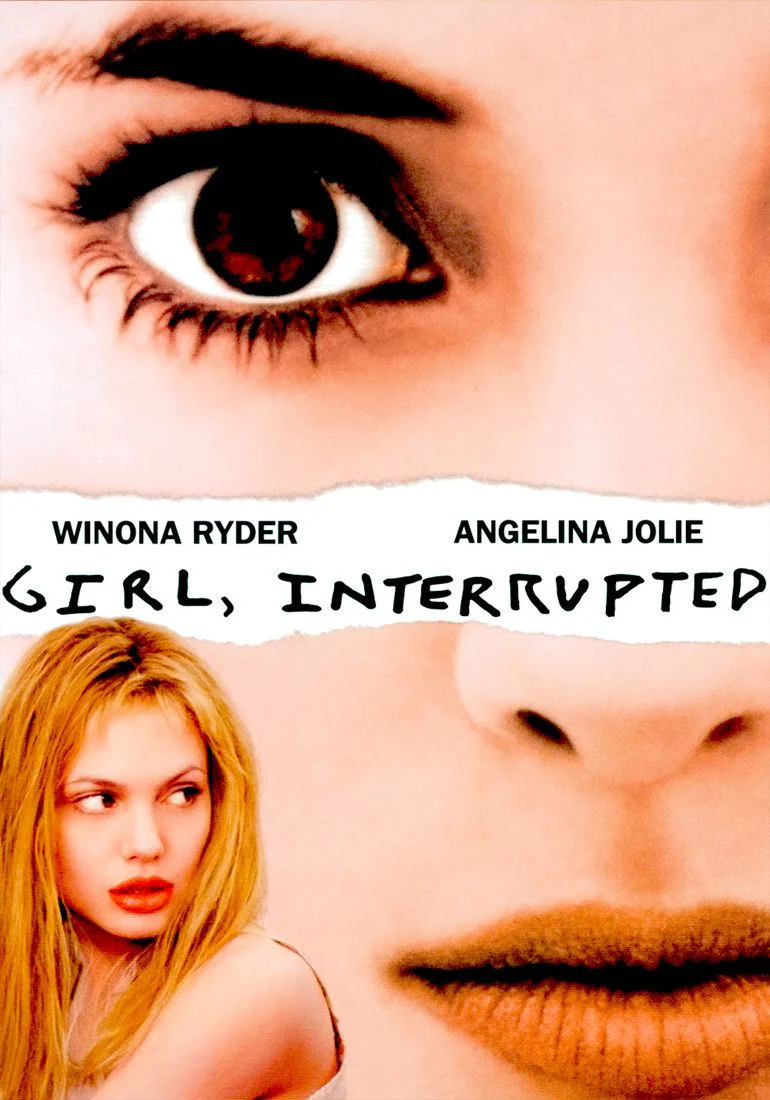
Note: This article, obviously, is about millennial struggles with serious mental illness on a widespread scale, and mentions many extreme narratives that developed around that, things like online bullying and online romanticization, etc. Don't read this if it will ruin your day!
Many, many articles discuss the mental health crisis that began in the early 2000s amongst millennials. Why did we all get so anxious and depressed? Was it the internet? The boomers? Fluoride? Vaccines? What? Etc? Plenty of bullshit nonsense got pushed to explain it, of course, and we all know it was NONSENSE.
The reality of it was far more ineffable. Mental health struggles usually are. Anyways.
Instead of any of that, though, I’d like to discuss how we saw our own mental health back then. How did the media portray the burgeoning epidemic of troubled teens? How did we ourselves as younger people experiencing those things express it? Like I said, there’s plenty written about the how and why of millennial malaise.
The narratives of it all, though, tended to be silently controlling at times, like rare costumes donned willingly or forced upon us by our parents or peers. This topic is quite the third rail by comparison, actually. Surprising. You’d think people would care about how we (and others) saw ourselves and talked about it, contextualizing things? Maybe find it significant?
The truth is, there was an ugly cornucopia of narratives available for our struggles. They could be hard to escape, too. These were often religious, grotesquely medicalized, sickeningly aestheticized, adversarial in nature, or monetized. They were rarely sensible, accurate, humane, or patient-led in a gentle, understanding way. Narratives, for whatever reason, had turned deeply important for my generation, so…
To begin, I believe that the media portrayal of millennial mental health struggles never really helped anything. Many movies and television shows tried to be sensitive towards these topics (while also cashing in on them). They simply weren’t, and gave the wrong ideas. Movies like Augusta, Gone and Girl, Interrupted exuded emotional influence, though. This kind of media changed how people saw mental health overall back then, and in a bad way. I’m terribly terribly terribly sorry if any of those “crazy girl self-actualizes” movies are your favorite. Things can be entertaining without being accurate, useful, or giving good vibes, right?
I also (perhaps more controversially) believe that millennials often expressed their struggles with mental health in strange and novel ways. Sometimes, this was because of the influence of popular media about mental illness, I’m sure. There were other reasons as well, such as lack of adult intervention, and some other unfortunate generational factors. It could’ve been avoided with the aforementioned adult guidance, but that didn’t happen much back then. It did for me, but seemed very very very uncommon.
These narratives of mental illness featuring young millennials in the 2000s served a limited number of purposes in different genres. In a lot of cases, they were about salvation in some sense of the term.
In America this was often a literal religious phenomena where the mental illness ended or was ameliorated by forming a religious “relationship with Christ” or something of the sort. As a teenager experiencing depression for the first time, this was the first thing people thought to “try” on me. My peers especially assumed my mental health issues were because I wasn’t a Christian at the time.
Even adults (teachers included, outside of school occasionally) would “witness” to me about Jesus to try and cure my depression. Maybe it’s easy for a normal person who hasn’t dealt with mental illness to assume this is how it works.
Uhm, no. When I came to Christ, it was of my own accord. I don’t find this kind of manipulative approach to religious choices appropriate. Ever. I suspect things like Jack T. Chick’s storybook tracts and other narratives where someone becomes a Christian and suddenly cured of any mental illness inspired a lot of deep problems.
In case you’ve never seen those, a lot of them imply demons (yes, literal demons) are to blame for mental illness. Thus, becoming a Christian banishes them. Now that I’m a Christian later in life, I know this is nonsense and that Christians can have things like depression, tics, anxiety, etc too.
Some American “evangelical” types really, really want to believe this narrative, though. This is partially just because it lets them play saviors themselves by convincing others to “become Christians.” It’s also because it lets them exteriorize mental illness and blame something (the demons) rather than admitting the issue is really complex sometimes, and you might need to be trauma-informed to approach it. Some clergy are, but not many in America…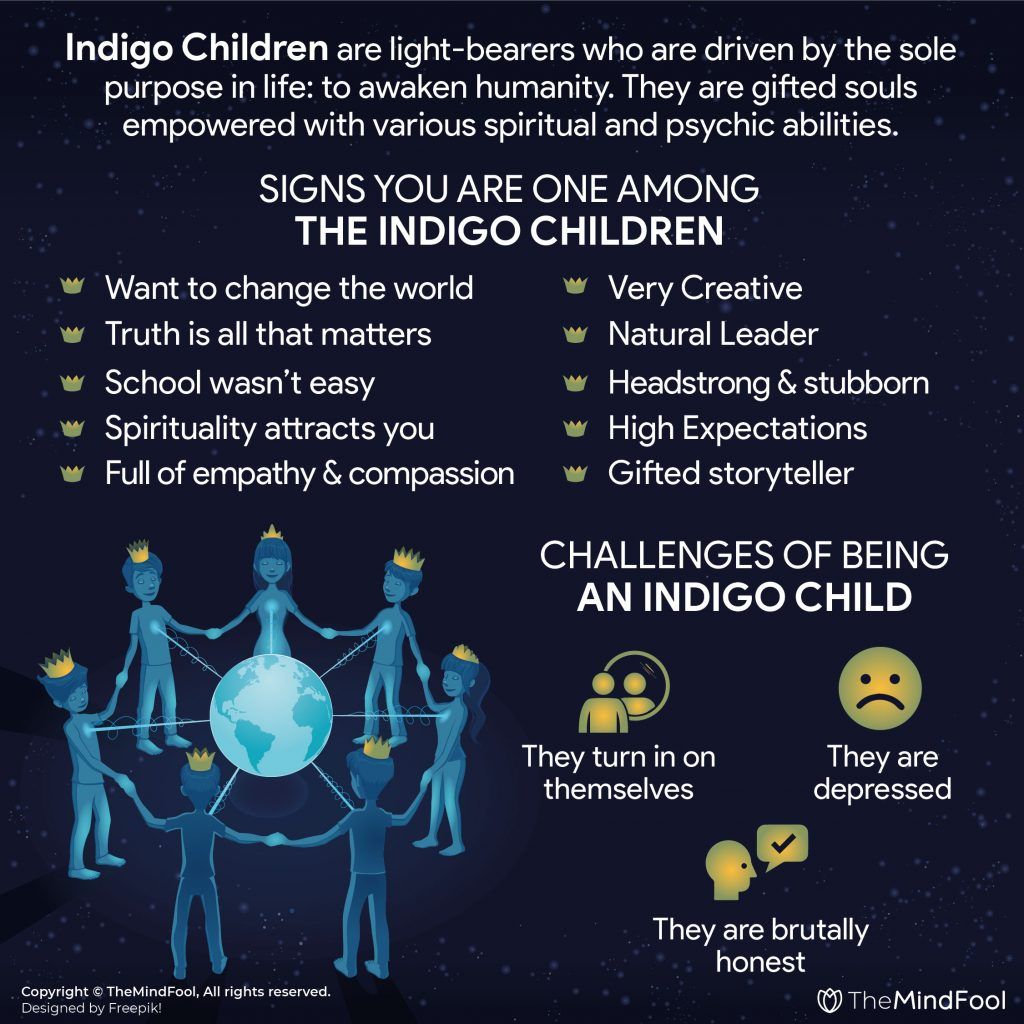
Did you think the religious attempts to understand us stopped there, though, with the Christians? Nope! Let’s not forget the gorgeous and shiny New Age movement, which was still trucking along right through the aughts on its way (allegedly) to the 2012 ascension or whatever. They were well and ready to convince as many of us as possible that we were powerful Indigo Children ready to transform the world with our psychic abilities!
These New Age Gurus (or whoever they were channeling) deeply wanted to convince us we were old souls and specially incarnated to save the world. That, they claimed, was the reason for any sense of displacement or unease. Yeah, no. I try to be understanding of different spiritualities, but…
The concept of Indigo, Crystal, Rainbow, or other shiny, glow-ish Children really just dovetails too neatly with things like depression, trauma, anxiety, and especially just general neurodivergence to ignore. Ditto for the later “diet” version of this we saw with the “I’m an Empath!” movement, which rebranded those much later.
Conversely, these salvation narratives also took a secular approach sometimes. In these, the person who saves the mentally ill person isn’t from a church. They’re a doctor, a therapist, or a parent. In those, the narrative is about the “Power of Love” or something similar, more like traditional fiction. The patient might be rescued by a particular form of therapy, perspective, or something else even. It varies. Now, if you’re struggling with mental illness, you should go to a doctor or therapist, yes, but these narratives were… a little off? They’re still comparable story formulae, and showed up again and again in the 2000s. And earlier. These go back earlier.
These are almost invariably written by the therapist/doctor/parent/etc, not the patient, even though they typically try to write from the patient’s perspective. By try, I mean they’ll include long passages of details the therapist couldn’t have known or seen, dwelling on the patient’s supposed inner monologue, etc. To me, I’m 100% fine (and even interested at times) in reading therapists write about (consenting) patients, but they shouldn’t do so with such rampant disingenuity. All this screams that the book is maybe just fiction, ghostwritten, or both…
Either way, most of these weave a nice story about… salvation, yes. Again many are way older than the 2000s (think Sybil, or I Never Promised You A Rose Garden), though the genre got a huge boost then, mostly from movies and remakes. Rose Garden, though only ever made into that TV movie as far as I saw, was pretty egregious in retrospect, particularly in how it describes how the patient felt about the doctor (who was the one writing it, of course).
I remember one book I’d read in particular (The Flock), which was written by the therapist, of course. It was about a patient with dissociative identity disorder, as the title implied. Halfway through, the therapist starts seeing the patient for free. He takes her to his house a bit with his wife. He later brushes off criticism of messianic counter-transference as if it were some kind of cute joke with the patient, because “Oh, look at the funny big words,” not noting that they decode to exactly what I’m talking about here: his obvious savior complex.
In other situations the stories were about pitting people with one form of mental illness against another as if we were Pokémon or something. Common in movies, these plots were extremely covert. They were often tacked onto adaptations of books and things, not appearing in the originals. The protagonists in these could be anyone, but, the villains have to be Cluster B of some sort. Remember! It was decidedly problematic to villainize most mental illnesses, but Cluster B was exempt. Some stories just needed a villain to hold things together.
Cluster B itself as a diagnostic category ran a strange gamut in the 2000s. It’s always been vilified to a degree. In the late 1990s, however, the movie Girl, Interrupted made Borderline Personality Disorder in particular look less scary (and capable of fighting the evil sociopaths of course). If I remember right, that weird fight isn’t even represented in the original book! While you cannot diagnose teenagers (as millennials were at the time) with personality disorders, people (including authority figures) did seem to try, going by my peers experiences online, etc…
Speaking of my peers (and me, I guess), let’s turn to a discussion of how we portrayed our own mental health struggles, primarily online.
I myself (as a millennial youth, anyways) never really posted much about any mental health struggles I was having. At the time, I feared how that might look, after all. I did chat with other millennials about them back then, though, and saw that portrayals really ran the gamut, as did sheer misinformation.
The misinformation was probably the worst part. In school, we all tacitly took a small health class. At least, we did at my school, and I assume it was universal in America and most jurisdictions. In it, aside from a brief “breathe deep” section about “handling stress,” there was no talk of mental health, though. This left kids… confused sometimes?
I knew one poor dude in college who was absolutely convinced that if he didn’t take his meds (for borderline personality disorder) religiously and follow all stipulations very carefully, he’d develop what he feared would be “multiple personalities.” Guy didn’t grasp how DID worked, either. His only reason for believing that seemed to be that the internet said DID and BPD shared some roots (kinda but not like that exactly).
I guess a doctor didn’t quite deny it strongly enough or explain well. Trying to explain that dissociation didn’t quite work like that, and he didn’t have to fear an “evil personality” showing up suddenly if he missed his Zoloft tended to fall on deaf ears because he was deep in panic already during those months… weird stuff.
The idea that vaccines cause autism has long been a creepy lie told by wine moms and the far right. I'm not not not exactly sure why they don't like vaccines unless it's actually part of some secret desire for "survival of the fittest." While most of us ended up with the vague idea that this was bullshit (it is), I saw people struggle with relatives about it. Millennials weren’t educated enough about the reality to defend against it in many cases.
I also knew plenty of people who did not grasp that SSRIs take time to work, do not “get you high” and are not “happy pills,” too. This probably contributed to the later pushback against mental healthcare services in our millennial age group. Like, come on, most people don’t want to use something they don’t at least tacitly understand, right?
And… let’s walk on unstable ground a bit, shall we? Maybe bring up some things people rarely want to acknowledge about millennials when we were younger?
Millennials, especially as teens and young adults, did romanticize mental illnesses, especially depression, to an extreme degree, especially in online subcultures. This wasn’t healthy and caused a multitude of problems. A lot of this romantic aura came from those above narratives and filtered into the millennial mindset, but still, it was there, regardless of who started it out.
The (parody, yes, stop it, it was a parody I’m fairly sure) fanfic My Immortal made a lot of us laugh, and still does. It’s one of the funniest things to come out of the wizard stuff of the 2000s, at least. Even today I sometimes wistfully remember sitting in a college dorm with someone whispering a line from it and everyone croaking with chuckles. It’s about being emo and goffic at Hogwarts, right?
There’s also parts in like this???
On the night of the concert I put on my black lace-up boots with high heels. Underneath them were ripped red fishnets. ThenI put on a black leather minidress with all this corset stuff on the back and front. I put on matching fishnet on my arms. I straightened my hair and made it look all spiky. I felt a little depressed then, so I slit one of my wrists. I read a depressing book while I waited for it to stop bleeding and I listened to some GC. I painted my nails black and put on TONS of black eyeliner. Then I put on some black lipstick. I didn't put on foundation because I was pale anyway. I drank some human blood so I was ready to go to the concert.
I went outside. Draco was waiting there in front of his flying car. He was wearing a Simple Plan t-shirt (they would play at the show too), baggy black skater pants, black nail polish and a little eyeliner (AN: A lot fo kewl boiz wer it ok!).
It’s aggressively 2006, ain’t it? These make a little more sense if you realize that millennials were romanticizing mental illness at that point, often to an intensely creepy degree that could be parodied like that.
To me, it comes across as (probably) a millennial writer parodying a very real phenomenon we were frequently coming across and grappling with live online (or off)! I can’t, of course, get inside Tara Gilesbie’s head or know who she was or why, but that’s my guess.
My point? People wouldn’t have written things like the above passages (and swapped them around, and turned them into an unprecedented fanfic phenomenon) if they didn’t claw into something millennials were already doing just a little bit. And we were. Some of us. Not intentionally, and certainly not to Tara’s caliber, but the vibe was there at times, so to speak. I’m not talking about something that ostentatious, obviously, but… yes.
One of my first experiences with shared hosting was sharing paid webspace with a girl who, one day, did (as far as I know) make a suicide gesture after letting everyone on AIM know about it. It was quite an awful afternoon, with folks whipping out phone cards to try and access her parents, failing, genuine long-distance calls, etc…
After returning from the emergency room, she immediately began typing up a memoir-like text describing the (three-day) experience, intent on posting it on her site. Even at the time as a fourteen-year-old, I wasn’t sure how to feel about this?
On one hand, it felt like she wasn’t taking what had ostensibly went down seriously, and was using it for content production. On the other, it had happened to her and wasn’t it her right to express as she pleased? To process as she wanted? I didn’t know how to view these kinds of posts, which were often long and florid. And anyways, can I be that critical? I’ve written bits about my own struggles with status epilepticus and how much it sucked being intubated, for example. I think I did it it long after the fact, and in a way that didn’t terrify or exploit things, though? I’m still not sure how to feel about that kind of content!
Most people who experienced mental health struggles back then didn’t dive into that kind of thing. Granted, it wasn’t uncommon, but it wasn’t the majority. It happened enough to influence the default culture in disturbing ways. I was, as I’ve mentioned before, adjacent to the “teen cam scene” in the early 2000s. I say this because, I didn’t have a webcam on my site (after a month of hellacious experiences with one).
I did make and provide tons of Paint Shop Pro and website resources that got used by the (weaker) members of that camgirl community, though, so I call it adjacent. I’m certain there was one or two “caught on camera” mental health crises with the webcams, but I don’t remember details. I would close the browser on that kind of thing, after all. The ones that did happen were quite a splash and probably made the news, given webcams were new, didn’t stream video (just pictures) and the internet scared people.
I remember the scandal rag sites. Those existed at the time, believe me. There was Internet Gossip (yes, a site literally just called Internet Gossip) about the camgirls and such. I remember reading it once in a while when a friend or someone who’d asked for art got into trouble on the comments or something. I wrote an article for it once about the overuse of hideous clipart or something that was, admittedly, a bit like mild bullying and I regret it.
It wasn’t exactly the post-apocalyptic free-for-all of trolling we see on contemporary comparable sites, but it did, errr… address these topics. It “called out” people (supposedly) just weaponizing mental health issues for online clout and attention occasionally. Articles would mostly just claim they were “faking it.” Usually, these were the more popular camgirls targeted rather than artists or the smaller ones, likely because folks needed the artists around and didn’t care about smaller camgirls.
This also happened in the fandom communities I was in, as well as in the political LiveJournal communities I ended up joining, some of the occult message boards, and even some programming mailing lists I was still on. The “faking it” accusation wasn’t limited to threats of ending one’s life, either. “He’s not really got Asperger’s” was a common sentiment, as was claims of faking any kind of physical illness. We’ll ignore the latter, because, while loathsome, it’s not the topic here.
Asperger's was the name used for autism of certain types at the time, rather awkwardly. Men in particular got accused of faking that. Whereas women were often accused of faking mental illness "for attention," a man was typically said to be faking it "because he's simply lazy" and wants to avoid adult responsibilities, presumably.
It doesn't wash either way because both of those things merely complicate one's life further, right? If you're truly that lazy, you surely won't want to deal with "acting autistic" and getting diagnosed, for example. A lot of the latter accusations towards men and boys primed the pump (so to speak) for later confusing sentiments targeting young, millennial guys.
Weirdly? The “faking it” whines were always accompanied by some big speech about how the person was super-offended by the dude because they themselves knew mental illness was super-serious. It was a strange performance that probably continues in some spaces to this day. I can’t be sure because I keep my interactions with those sorts to a minimum because I’m a busy adult and don’t have time to listen to attacks on other people, but anyways.
It really came down to us having a really bizarre picture of what mental illness even involves. Is it some kind of demonic harassment, fixable if only we’d understand Christ Jesus? Could we be rescued if only we trusted in one special adult who understood things and had read the right books? Or were we just fine, only a bit magical, special, psychic even…. Indigo?
What were we supposed to do when our struggles didn’t fit these weird cinematic narratives? Know how to seek help? How to understand what was happening? I also personally think some people (like my hostee buddy who wrote a “memoir”) tried to make their experiences match as a way of seeking validation for what they were feeling. After all, if yours didn’t, were they even real, or were you pretending for clout?
…do you see a scary loop here? I do. Very strange, very toxic, and could’ve been avoided if the schools had actually taught us significantly more about these kinds of things. They had time to compare “deflowered” girls to licked cupcakes at sex education assemblies and hold unrelated patriotic gatherings after 9/11, but not not not to teach kids about trauma and depression? How to take care of ourselves?
The legacy of this continues to this day, with the downright abysmal track record millennials have with mental health, and the many, many many grifts out there trying to take advantage of that. I'm sorry if you're a (fellow, actually and obviously, I'd hope) millennial reading this and that offends, but it's the truth.
My generation has a poor track record with these things, and we don't exactly have the time to turn things around completely. I feel like I've been supremely lucky compared to most of my generation in that my issues were so violently physical that it was difficult to dismiss or romanticize away, and generally just involve, yes, physical treatments, but...
Nowadays, though, all these narratives have been packaged neatly by influencers, who continue to hawk them, in various ways, to millennials and their kin. Were any of them ever helpful? Considering how quickly "KYS" became a super-casual insult amongst my age group and younger, I can't say we ever got the right idea about this kind of thing...
This page was last updated on January 15th, 2026.